Breaking: Solar Plane Ditches in Ocean
The first solar-powered aircraft ever to complete a round-the-world flight has been forced to ditch into the Pacific Ocean after an unplanned extension to its autonomous mission depleted its battery reserves, sources confirmed Tuesday.
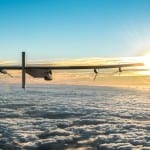
The unmanned, sun-powered plane was on an 8-day autonomous flight when a sudden weather system forced it to deviate far off course, consuming more power than its solar panels could replenish.
Details of the Incident
According to Dr. Maria Chen, an aviation engineer at the Renewable Energy Institute, 'The aircraft's batteries were already running low when the diversion struck. There was simply no way to recover before the cells hit zero.'
The plane's flight path had been planned to maximize solar exposure, but an unexpected cold front brought heavy cloud cover for three consecutive days, preventing sufficient charging.
Background: A Milestone Mission
The aircraft, known as the Solar Voyager, had previously made history in [year] by completing the first ever solar-powered circumnavigation of the globe. Its latest autonomous flight was intended to demonstrate long-endurance capabilities for future surveillance and communications applications.
Developed by the nonprofit Solar Wings Alliance, the plane was equipped with 12,000 solar cells and a lightweight lithium-ion battery pack capable of storing enough energy for up to three consecutive night flights.
Technical Specifications
- Wingspan: 72 meters (wider than a Boeing 747)
- Weight: 2,300 kg (comparable to a compact car)
- Motor: Four electric motors, each producing 10 kW
- Battery: 5,000 Wh/kg lithium-sulfur pack
What This Means for Solar Aviation
Prof. James Li of the Center for Sustainable Flight noted, 'While this is a major setback, it does not invalidate the technology. It underscores the critical challenge of energy storage in variable weather conditions – a problem the industry must solve.'

The incident may accelerate research into hybrid solar-battery systems that can tap into reserve power sources during emergencies. It also raises questions about risk management for autonomous solar flights over oceanic routes where weather forecasting is limited.
Immediate Impact
- Search and recovery efforts are underway for the aircraft's debris, crucial for post-crash analysis.
- The Solar Wings Alliance has grounded its remaining fleet pending investigation.
- Funding agencies are likely to demand more rigorous contingency planning before approving future long-duration missions.
Dr. Chen added, 'Solar aviation is not dead; it's growing up. Every breakthrough comes with failures that teach us how to improve resilience.'
For more on the original round-the-world flight, see Background section.